Menú


Contact FORCADELL
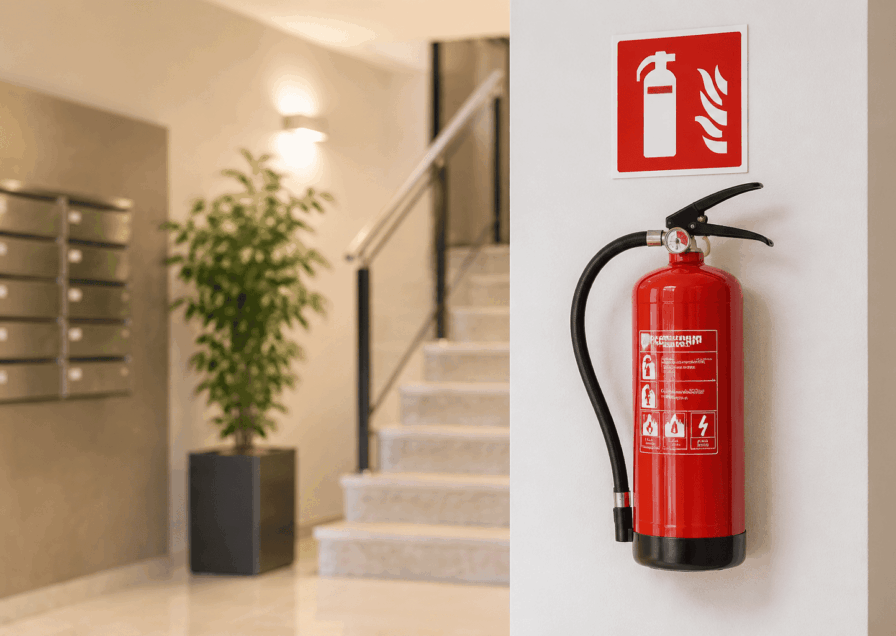
Fire extinguishers and fire protection systems are essential for ensuring the safety of any building. Whether in residential communities, commercial premises, offices or industrial facilities, keeping this equipment in good condition is crucial to responding effectively in an emergency. But how often should these systems be inspected? And who is responsible for their maintenance?
In Spain, the Fire Protection Installations Regulation (RIPCI), approved by Royal Decree 513/2017 and subsequently amended, establishes the maintenance requirements for active fire protection equipment and systems.
For fire extinguishers, inspections are carried out at different intervals:
These inspections help identify potential faults and prevent equipment from failing when it is needed.
In addition to fire extinguishers, many buildings have other safety features, such as smoke detectors, fire alarms, fire hose reels and emergency signage.
Each of these systems has a specific maintenance schedule, which may include quarterly, six-monthly or annual inspections, depending on the type of installation and the applicable regulatory requirements.
For example, fire detection and alarm systems require regular operational checks, while fire protection signage must remain visible, legible and in good condition.
The owner or operator responsible for the installation must ensure that fire protection equipment is kept in proper condition and that all required inspections are carried out.
In residential communities, this responsibility generally lies with the homeowners’ association, which may arrange maintenance through its property administrator.
Although some visual checks may be carried out by authorised personnel at the premises, statutory technical inspections must be performed by qualified professionals, in accordance with the requirements applicable to each type of equipment.
Simply having fire extinguishers and fire protection systems installed is not enough: it is essential to ensure that they will function correctly when needed. Regular maintenance helps prevent risks, identify faults and ensure compliance with regulations.
That is why it is important to rely on specialised companies such as Extinsa, which has extensive experience in the installation and maintenance of fire protection systems. Its services provide homeowners’ associations, businesses and other property owners with professional solutions to help keep their facilities in optimal safety conditions.
Newsletter